European ash is one of the most valued hardwoods in Europe, recognized for both its natural beauty and physical properties. Native to European forests, ash (Fraxinus excelsior) has been used for centuries in the production of furniture, tools, and architectural design elements. Its popularity is due not only to its strength but also to its aesthetics and versatility, qualities that make it a favorite wood for projects requiring a balance between functionality and visual appeal.
The unique characteristics of European ash make it one of the most appreciated hardwoods across various industries. Here are five essential qualities that set it apart from other woods and make it the ideal choice for a wide range of applications.
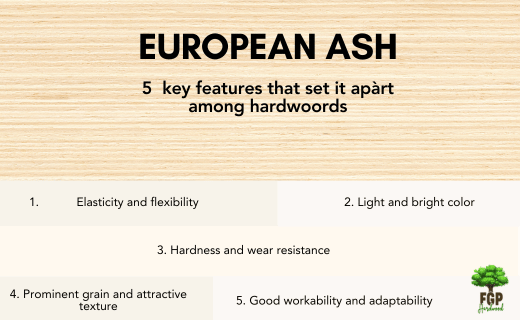
1. Elasticity and flexibility
One of the most notable characteristics of European ash is its high elasticity and flexibility, making it especially useful in applications where a resistant material is needed but can also absorb impacts. This elasticity allows it to withstand deformations without breaking, making it an ideal material for objects subjected to constant stress, such as tool handles, curved furniture, sports equipment, and structural design elements. Its ability to adapt and resist tension forces distinguishes ash from oak or beech, which tend to be more rigid.
2. Light and bright color
The color of European ash is another distinguishing feature. It presents tones ranging from creamy white to soft beige, offering a bright and uniform appearance. This natural color allows ash to integrate seamlessly into modern and minimalist decor, where a clean and bright aesthetic is desired. Additionally, its light hue makes it highly versatile, suitable for both natural finishes and staining, adapting to various design palettes.
3. Hardness and wear resistance
Although ash is flexible and has some impact-absorbing capabilities, it is also a notably hard and wear-resistant wood. With a hardness superior to other European woods like beech, ash is ideal for high-traffic surfaces, such as flooring, and furniture that requires durability. This combination of hardness and resistance makes it suitable for applications that demand continuous use, maintaining its integrity and appearance over time.
4. Prominent grain and attractive texture
European ash features a straight and prominent grain that gives it a unique texture and aesthetic appeal. This distinctive grain adds visual interest to projects, making it an attractive material for interior design, particularly in furniture and paneling where a natural, sophisticated appearance is desired. The straight grain also facilitates cutting and assembly, allowing for smooth, uniform finishes that highlight the beauty of its texture.
5. Good workability and adaptability
Another standout feature of European ash is its excellent workability. It is a wood that is easy to handle with both manual and mechanical tools, making it accessible for various types of projects, from the most artisanal to industrial. Furthermore, ash takes stain and varnish very well, allowing its natural appearance to be altered to fit a variety of design styles. This versatility makes it suitable for applications ranging from custom furniture to more complex architectural structures.
As we have seen, European ash is a versatile hardwood that combines aesthetics, functionality, and durability. Its elasticity, light color, wear resistance, attractive grain, and ease of work make it adaptable to a wide range of applications in construction, interior design, and furniture manufacturing. The popularity of European ash is not only due to its physical characteristics but also its ability to provide a modern and warm appearance to projects, making it a standout option among European hardwood
If you want to know more about the world of wood, don’t forget to follow us on Linkedin. Stay informed!