

European beech is one of the most widely used hardwoods in interior furniture, joinery, and fine woodworking. Its dense yet uniform structure, fine grain, and excellent machining performance make it a popular choice among both artisans and industrial manufacturers.
We’ll now explore the three key areas for achieving the best results with European beech: preparation and machining, finishing techniques, and proper care to maintain its quality over time.
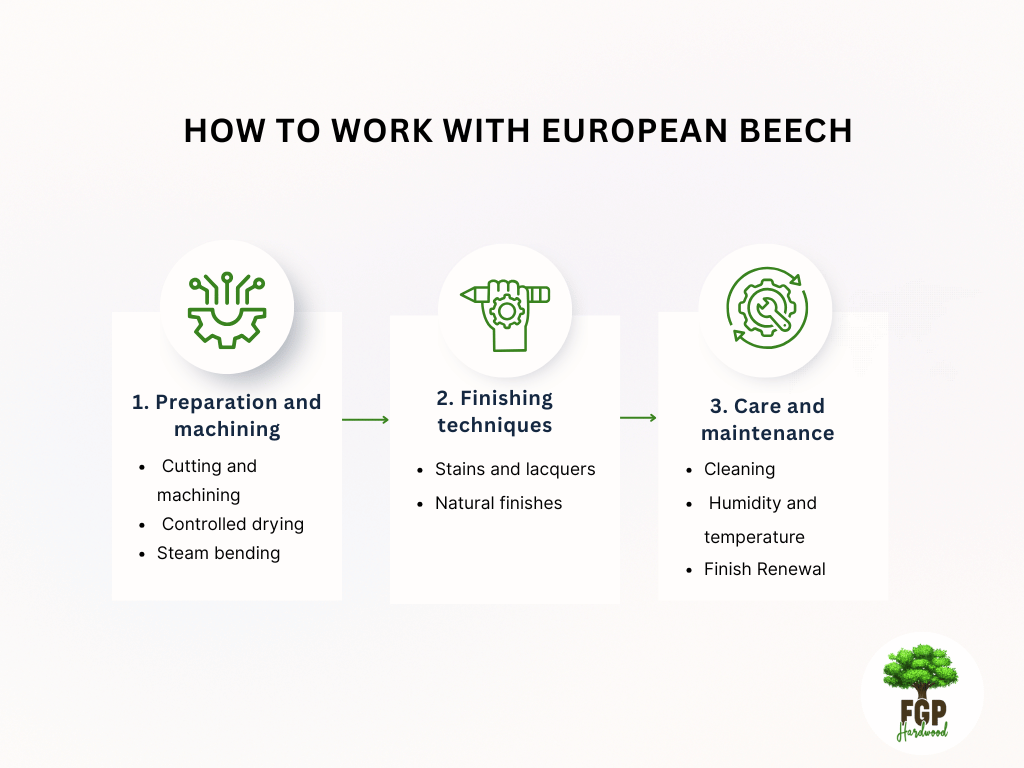
1. Preparation and machining: key tips for working with beech
European beech is highly workable, but it does require specific attention to avoid defects such as warping or excessive moisture absorption
🔧 Cutting and machining
Use fine-toothed saws, very sharp blades, and carbide cutters to prevent burning during cuts. Always follow the grain when cutting to avoid splintering or tear-out. Control feed rate and avoid applying excessive pressure to achieve clean, smooth cuts.
🌬️ Controlled drying
Beech is sensitive to moisture changes, so it must be dried slowly and evenly to a moisture content of 8–10%.
🪵 Steam bending
One of beechwood’s most appreciated qualities is its ability to bend under steam without breaking the fibers.
2. Recommended finishes to highlight beechwood’s beauty
Thanks to its closed pores and fine grain, European beech takes a wide range of finishes beautifully. Choose the treatment based on your desired visual effect and the level of protection needed.
🧴 Stains and Lacquers
Water- or alcohol-based stains: Ideal for highlighting the grain without darkening it. The color applies evenly.
Nitrocellulose or polyurethane lacquers: Excellent for high-durability, professional-grade finishes with customizable sheen
🌿 Natural Finishes
Plant-based oils (such as linseed or tung): Penetrate the wood and enhance its natural tone. Provide a matte, smooth-touch finish.
Natural waxes: Protect the surface and deliver a satin look, although they require more frequent maintenance.
⚠️ Pro Tip
Before applying any finish, always test it on a leftover piece. Beech can absorb product heavily, especially if it hasn’t been sealed with a pore filler.
3. Care and maintenance of European beech
Once installed or crafted, beechwood needs basic care to stay in excellent condition and extend its lifespan.
🧽 Cleaning
Use a dry or slightly damp cloth, avoiding abrasive cleaners. For furniture with natural finishes, apply maintenance oil every 6–12 months as needed.
💧 Humidity and temperature
Avoid exposing beech to extremely dry or humid environments, as it may expand or contract. If possible, maintain consistent indoor ventilation to balance humidity levels.
🔄 Finish Renewal
For heavily used surfaces (e.g., tables, floors), it’s advisable to reapply protective finishes every few years, depending on wear.
A light sanding and fresh coat of oil or varnish can restore its original appearance without replacing the piece.
Working with European beech is highly rewarding when done correctly. From cutting and bending to finishing, this wood offers stability, beauty, and excellent versatility.
With the right care, beech projects not only retain their visual appeal but gain character over time. Whether used in furniture, paneling, or decorative elements, it remains one of the most balanced European hardwoods in terms of aesthetics, strength, and ease of use.
If you want to know more about the world of wood, don’t forget to follow us on Linkedin. Stay informed!