
The anatomy of European oak plays a crucial role in determining its properties and structural characteristics. As we delve deeper into the internal structure of this noble wood, we can better understand how its intrinsic components influence its strength, durability, and appearance. From the arrangement of pores to the distribution of heartwood and sapwood, each aspect of its anatomy significantly contributes to the quality and versatility of European oak, one of the main European hardwoods, in a wide range of woodworking and design applications.
Let’s take a closer look at its key characteristics:
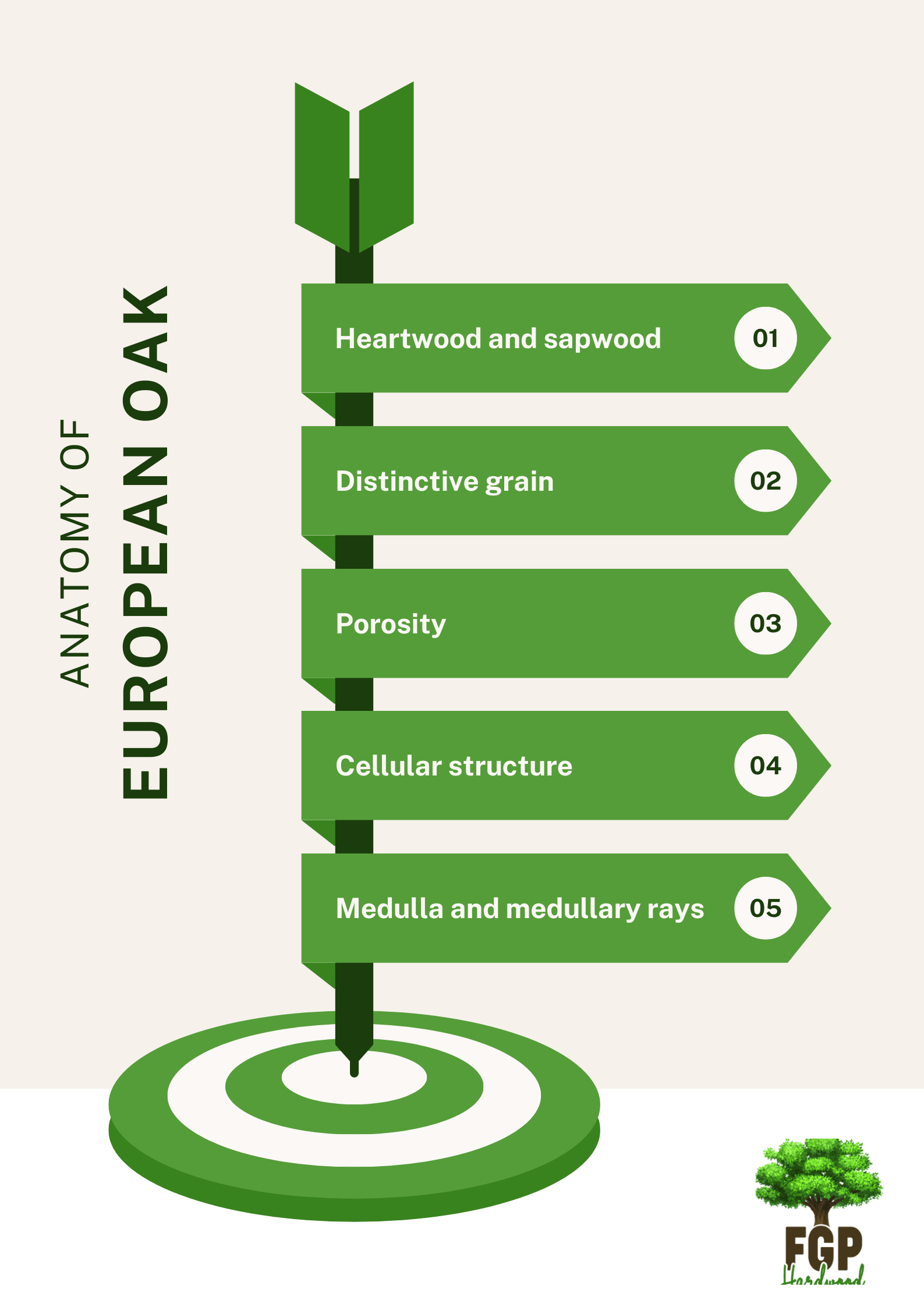
1. Heartwood and sapwood
European oak is composed of heartwood and sapwood. The heartwood, the innermost part of the trunk, is denser and more resistant, while the sapwood, the outer layer, is softer and lighter. This difference in density and color contributes to the appearance and strength of the wood.
2. Distinctive Grain
3. Porosity
The moderate porosity of European oak allows the wood to breathe and absorb and release moisture according to environmental conditions. This contributes to its dimensional stability and resistance to deformation.
4. Cellular Structure
The cellular structure of European oak, mainly composed of xylem cells, contributes to its strength and durability. These cells are responsible for transporting water and nutrients throughout the tree, strengthening its internal structure.
5. Medulla and Medullary Rays
The presence of medulla and medullary rays in European oak gives it a distinctive internal structure. These elements can also influence how the wood behaves during processing and final use.
Understanding the anatomy of European oak is essential for comprehending its properties and structural characteristics. Each aspect of its anatomy contributes to its strength, durability, and beauty. By understanding how the anatomy of European oak influences its behavior, artisans and designers can make the most of this noble wood in a wide range of woodworking and construction applications.
If you want to know more about the world of wood, don’t forget to follow us on Linkedin. Stay informed!